
The UEFA analytical departement took a deep dive into how Liverpool showed tactical flexibility in the match against Inter. The duel between Inter and Liverpool at San Siro gave UEFA’s analytical department plenty food for thought.

UEFA technical observer Michael Carrick highlights Liverpool tactical flexibility in Milan, where advantage shifted from one team to the another.

In the first video clip, you can see two moments related to Liverpool’s formation and how it allow the Reds to control the flow of game in the first 15 minutes. With four midfielders—Ryan Gravenberch, Dominik Szoboszlai, Curtis Jones, and Alexis Mac Allister—the visitors had a four-versus-three advantage in midfield, which is clearly visible in the first fragment.
The second moment concern the Reds’ defensive triangle. The second clip clearly demonstrate how Liverpool gained numerical superiority over Inter’s two forwards thanks to the support that Gravenberch provided to the central defenders.
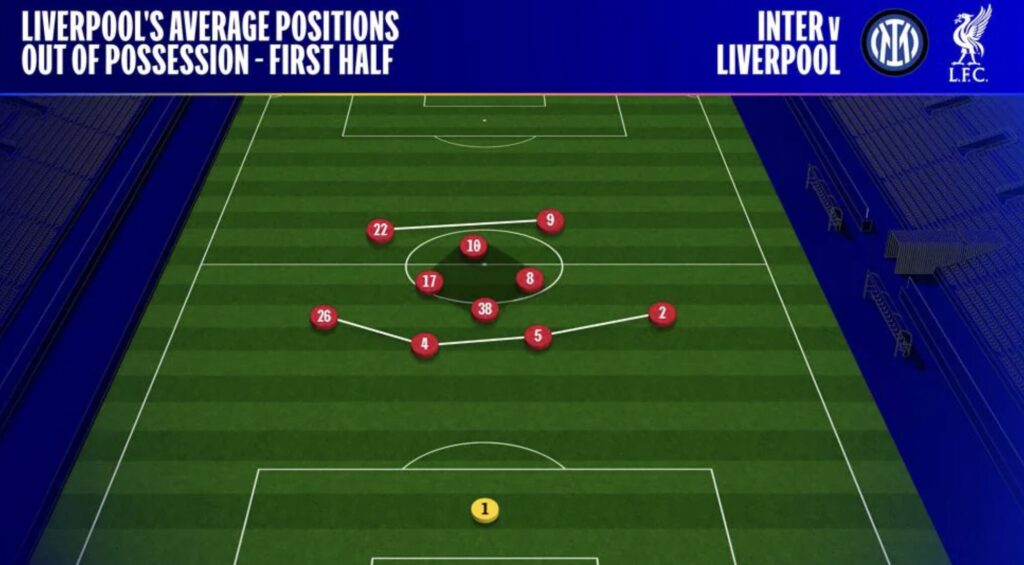
Explaining Gravenberch task, former Manchester United holding midfielder Carrick said: “A very selfless role. You just let the game flow and don’t try to chase the ball, because that would create free space for the opponent that they could exploit.”
“The less work you do around the ball, the better, because you’re trying to neutralize the threat through your smart actions—blocking passing lines and closing certain zones, even without getting close to the ball,” explained Carrick. “If you do it effectively, you can influence where the ball ends up, directing it where you’d like it to be.”
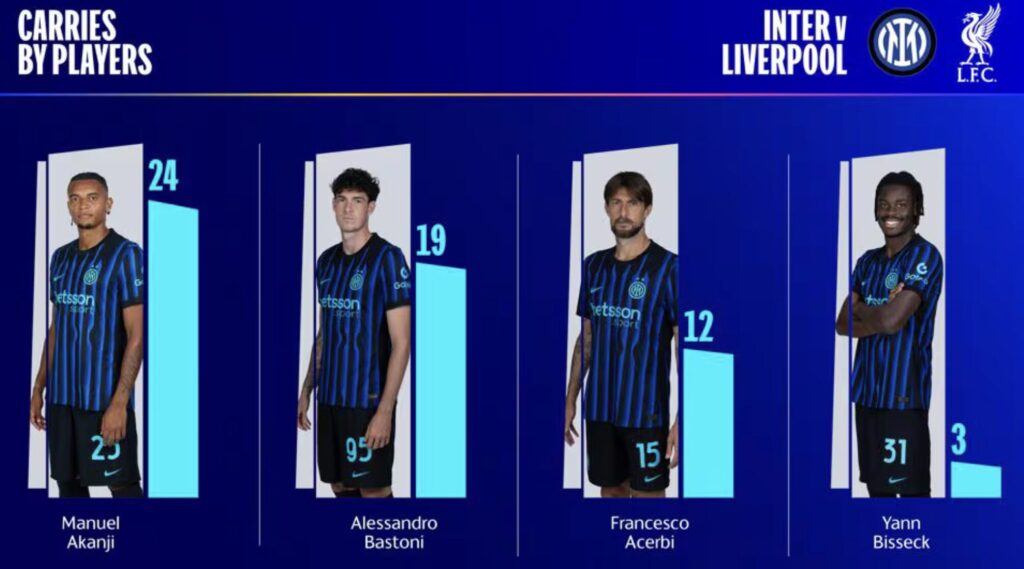
A notable feature of Inter in the first half was the work of the central defenders with the ball. Manuel Akanji excelled in this, advancing with the ball from defense 24 times—five more than Alessandro Bastoni, who took second place in this metric among all defenders in the match.
Liverpool had advantages in other areas of the pitch, but not in the attacking zone, and Inter made good use of that. “We were good at advancing the ball from defense,” noted the Milan coach Christian Chivu.
When a central defender advances with the ball, the question of risk versus reward arises, and according to Carrick, it’s important for coaches to assess what the team can gain in such cases. “In player development, especially for central defenders, the most important thing when advancing from defense and trying to build attacks is to look for solutions, not worry about problems,” he summarized.
The video above shows an example of Inter’s ball progression, followed by a fragment of Liverpool’s response with high pressing in the second half.
“Akanji broke through the center several times, therefore we started applying higher pressure on them,” explained Liverpool coach Arne Slot.
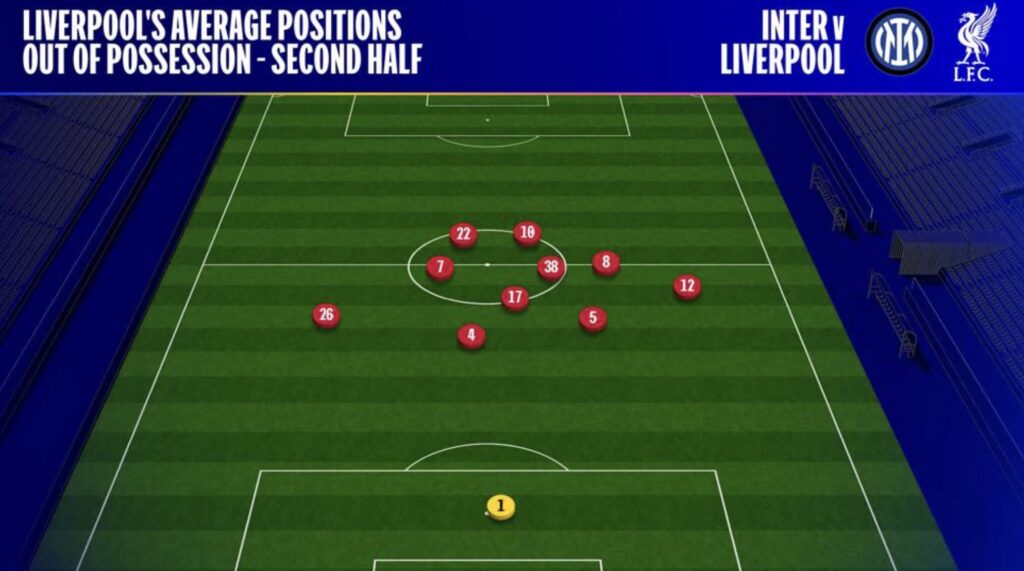
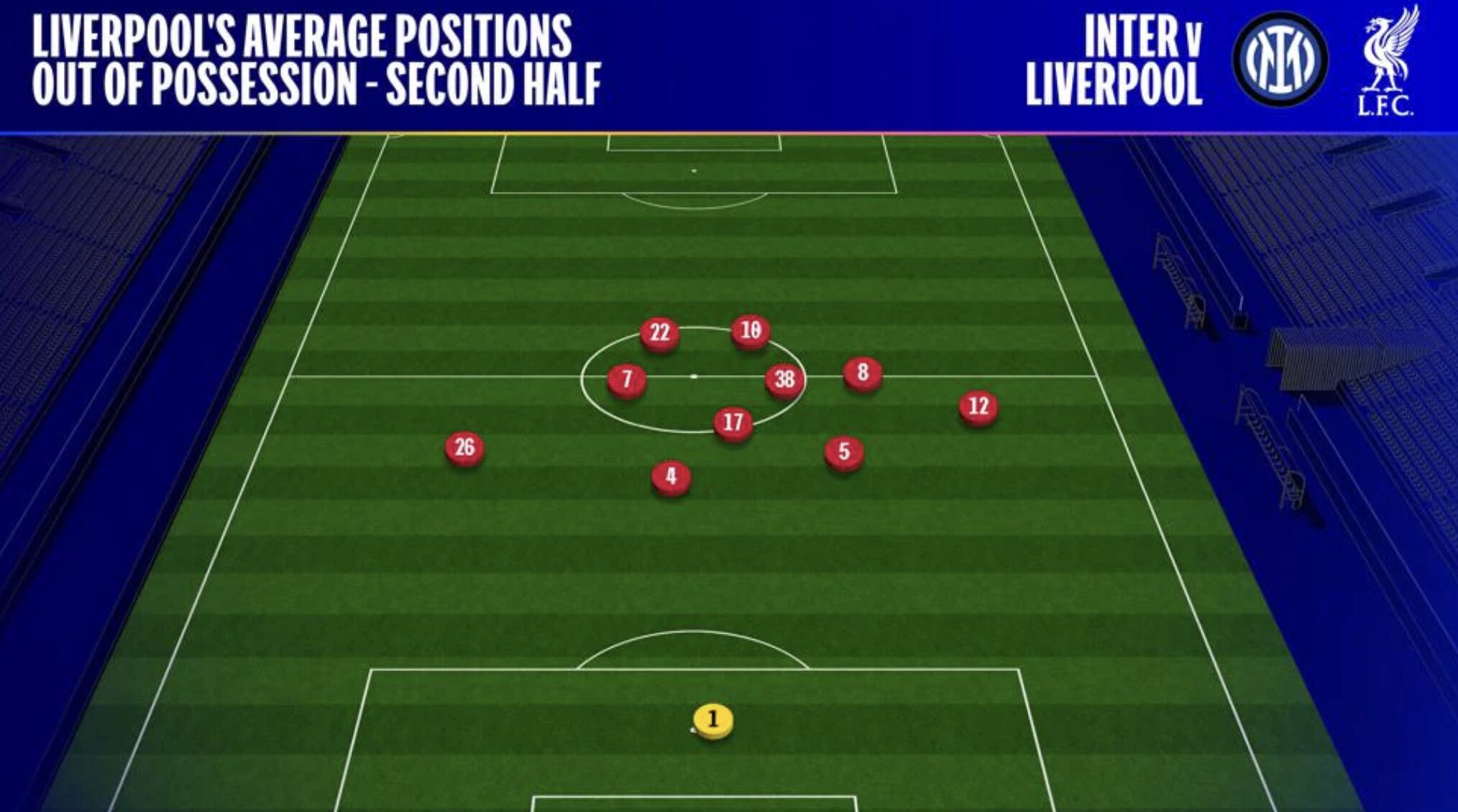
Liverpool’s forwards now pressed in a 4-4-2 scheme, and the graphic above shows how the visitors’ formation without the ball changed as a result. The impact was significant—in the second half, Liverpool players won twice as many aerial duels as in the first half of match.
Reflecting on what a coach should consider when switching to high pressing tactics, Carrick added: “The key question: what can your strengths counter against the opponent’s strengths? How do their weaknesses look against your weaknesses? It all comes down to trying to manipulate the game so that your strengths highlight their weaknesses. It’s simple.”
“There are many factors to consider here, for example, who is best suited for playing without the ball or who presses more effectively to regain possession,” noted the UEFA technical observer. “You also need to take into account pressing angles, since the habits of the goalkeeper and central defenders determine from which side you’ll attack them.”
This change played into Liverpool’s hands, although they also benefited from the play of substitutes Conor Bradley and Florian Wirtz, who snatched it for the visitors at the end of the match—as shown in the final video fragment below.
Leave a Reply